
Technical Product Specification: High-Performance Automotive Grade PP+EPDM-T25
1. Product Overview
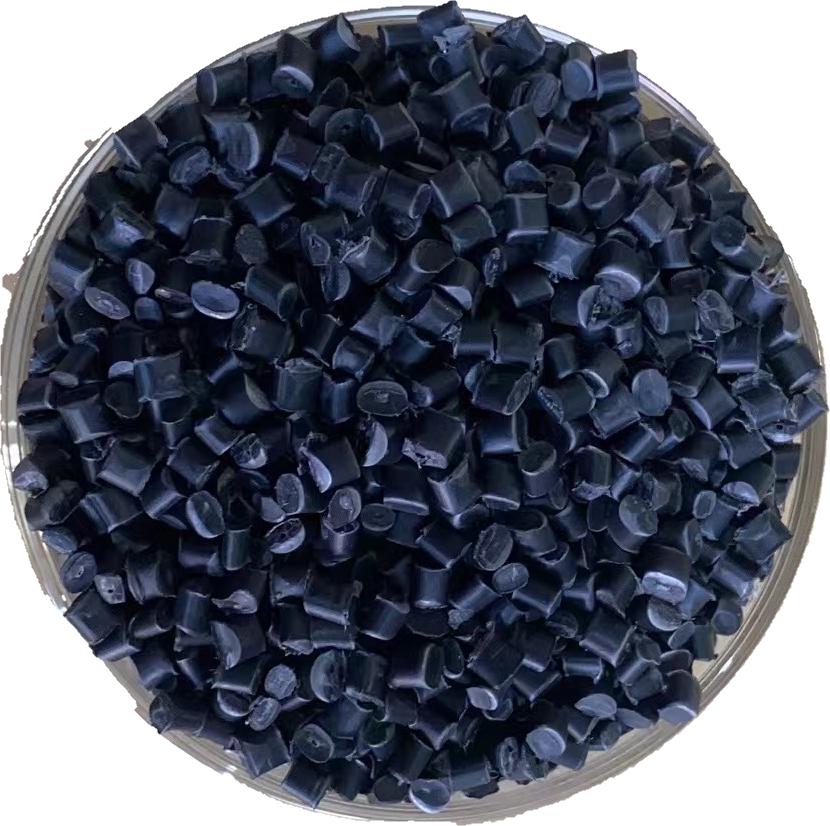
PP+EPDM-T25 is a high-performance, mineral-filled, impact-modified polypropylene compound specifically engineered for the automotive industry. It is formulated with a Polypropylene (PP) matrix, toughened with Ethylene Propylene Diene Monomer (EPDM) elastomer, and reinforced with 25% ultra-fine Talc (T25).
This material is designed to achieve an optimal balance of high stiffness, superior impact strength, and excellent dimensional stability, making it the premier choice for large automotive exterior parts and "thin-wall" lightweight designs.
2. Key Features and Technical Advantages
Exceptional Mechanical Balance
High Rigidity: The 25% mineral reinforcement provides superior structural support and a higher flexural modulus compared to standard T20 materials.
Low-Temperature Toughness: Thanks to the EPDM rubber content, the material maintains high energy absorption even at -30°C, ensuring "ductile failure" rather than brittle cracking during collisions.
Ultra-Low Shrinkage: The talc content effectively suppresses the natural shrinkage of PP, ensuring that large, complex parts remain free from warpage and deformation after molding.
Surface and Environmental Durability
Premium Surface Quality: Optimized melt flow properties significantly reduce surface defects such as "Tiger Stripes" (flow marks) and sink marks in large, thin-walled parts.
Weather Resistance: Formulated with high-performance UV stabilizers, ensuring long-term exposure to sunlight without chalking, fading, or embrittlement.
Low VOC Emissions: Meets strict automotive OEM standards for Volatile Organic Compound (VOC) emissions, ensuring safety for both interior and exterior applications.
3. Advantages of T25 vs. T20
Compared to the traditional T20 (20% filled) specification, T25 (25% filled) offers several critical upgrades:
Enhanced Stiffness: A typical increase in Flexural Modulus of 300-500 MPa allows for "Thin-walling" designs. Engineers can reduce part thickness while maintaining the same structural strength, effectively offsetting the increased density to achieve overall vehicle weight reduction.
Superior Dimensional Precision: Lower mold shrinkage (typically reduced from 0.9% to approx. 0.7%) enables a more precise "Gap & Flush" fit between parts, enhancing the vehicle's perceived quality and premium appearance.
Better Heat Resistance: The Heat Deflection Temperature (HDT) is increased by approx. 5°C - 8°C, allowing exterior parts (like grilles and mirror housings) to better withstand extreme summer heat and engine bay thermal loads.
Improved NVH Performance: The higher mineral content provides better internal damping, effectively reducing vibration and preventing "Buzz, Squeak, and Rattle" (BSR) during vehicle operation.
4. Typical Applications
Automotive Bumper Facias: Maintains a crisp, aerodynamic shape due to high stiffness while passing safety crash tests due to high toughness.
Side Skirts and Body Moldings: Resists stone chipping and environmental stress while maintaining perfect dimensional alignment.
Wheel Arches and Fenders: Ensures tight assembly tolerances even in complex, curved geometries.
Grilles and Aerodynamic Spoilers: Withstands air pressure and engine heat without thermal softening or deformation.
5. Technical Data Comparison (Typical Values)
| Property | Test Method | Unit | T25 Specification | T20 Reference |
| Density | ISO 1183 | g/cm³ | 1.09 - 1.12 | 1.04 - 1.06 |
| Melt Flow Rate (MFR) | ISO 1133 | g/10min | 15 - 25 | 15 - 20 |
| Flexural Modulus | ISO 178 | MPa | 2,000 - 2,400 | 1,600 - 1,800 |
| Tensile Strength | ISO 527 | MPa | 22 - 28 | 20 - 25 |
| Notched Charpy (23°C) | ISO 179 | kJ/m² | 35 - 50 | 40 - 55 |
| Mold Shrinkage | Internal | % | 0.6 - 0.8 | 0.8 - 1.0 |
| HDT (0.45 MPa) | ISO 75 | °C | 115 - 120 | 105 - 110 |
6. Processing Guidelines
Drying: Recommended at 80-90°C for 2 hours to eliminate surface moisture from the mineral fillers.
Melt Temperature: 200°C - 240°C.
Mold Temperature: 40°C - 70°C. Higher mold temperatures improve surface gloss and the strength of weld lines in thin-walled parts.
Injection Speed: Moderate to high speeds are recommended to fill large-area cavities efficiently.